

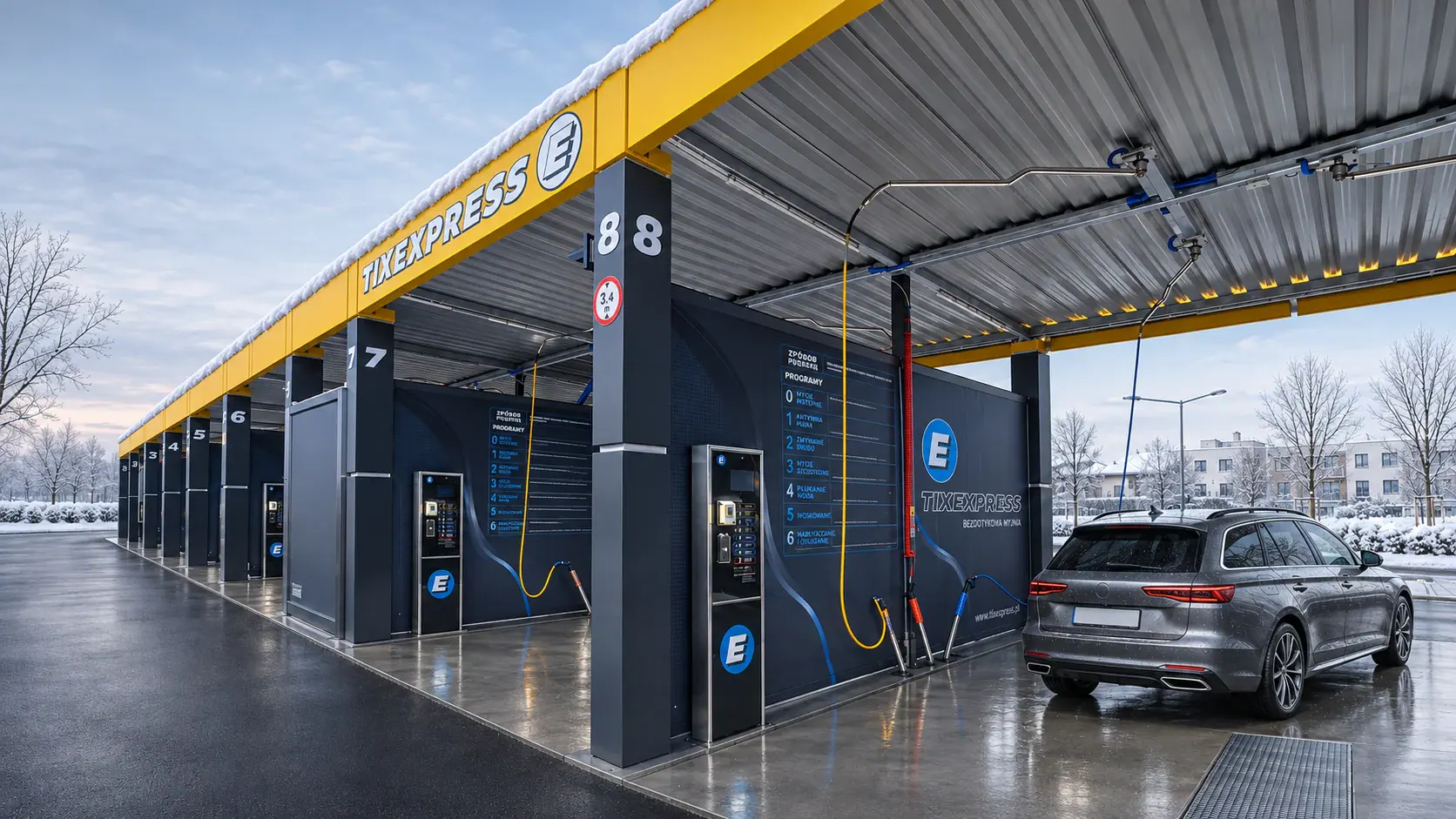
Can you wash a car in freezing weather? You can use a car wash equipped for winter operation, but an available bay does not by itself mean the conditions are suitable for your car. The easiest way to reduce risk is to choose a day with temperatures above freezing and allow time to dry the car. In severe frost, it is better to postpone washing in an open bay or choose a heated car wash where the car will be thoroughly dried before you leave. 12
In winter, the problem is often not washing the bodywork itself but water left around doors, locks and seals. Plan your visit together with what you will do immediately after rinsing.
Down to what temperature can you wash a car?
No single temperature guarantees safe washing for every car. The car's condition, the car wash equipment and the ability to dry areas where water collects also matter.
ADAC advises against washing below −10°C, pointing to the large temperature differences affecting paint, rubber and plastics. This does not mean −9°C or −5°C is automatically a safe choice at an open-air car wash. 1
When planning a visit, use the following guidance:
Still dry recesses and seals. Also check the temperature expected after washing.
Wait for a thaw or choose somewhere you can wash and dry the car in frost-free conditions.
If washing is urgent, look for heated premises with thorough drying.
This is a practical way to choose conditions, not a table of approved temperatures for all models. Toyota also recommends avoiding washing the car yourself in freezing weather and highlights the option of drying it in a garage. 2
How should you prepare a car for washing in winter?
Before paying for a programme, inspect the bay and check the instructions. Ice on the floor, frozen equipment or a notice that the bay is closed are reasons to choose another location. Also consider the route from the bay to the drying area.
Bring a clean, absorbent bodywork towel and a separate cloth for recesses and seals. This prevents dirt from the sills being transferred back onto clean paintwork. Check that you have somewhere to dry the car without rushing once the programme ends.
Before washing, close the windows, roof and flaps. Check the settings for the wipers, rain sensor and automatic boot opening. If the car has a car wash mode, use it as the manufacturer instructs — its functions may include closing the windows and securing the charge port flap. 15
Remove loose snow without rubbing it into the paint. Do not try to chip ice off the bodywork or pour hot water over a frozen car. If the car is heavily iced over, wait for conditions that allow it to thaw safely. 510
Care for seals with a product approved for the material. Apply it to a clean surface according to the product instructions. Volkswagen highlights the role of rubber seal care in preventing them from freezing shut; choose a specific product in line with your car's recommendations. 4
Washing a car in winter at a touchless car wash — step by step
A self-service car wash lets you choose programmes and handle the lance yourself. In winter, a methodical approach is particularly useful: remove heavy dirt, rinse thoroughly and allow time for drying.
1. Start by removing loose dirt
Remove sand and mud before contact washing. Choose the prewash programme according to the bay instructions. Do not move a towel, mitt or brush over a surface that still has hard particles on it. Prerinsing is also part of Volvo's recommendations for reducing the risk of scratching the paint. 6
2. Keep the lance at the appropriate distance
Set the nozzle distance according to the vehicle and equipment instructions. For example, Tesla specifies a minimum of 30 cm for the Model 3. This does not establish the correct distance for every lance and every part of a car. 5
Move the jet smoothly. Do not direct it at close range into locks, seal edges, exposed wiring or damaged paintwork. Forcing water more strongly into a gap is no substitute for thorough washing. 56
3. Use chemicals according to the programme instructions
Follow the sequence and dwell times given at the bay. Do not assume that winter calls for arbitrarily longer dwell times or stronger chemicals. The product must be suitable for the paint and the car's other materials, which may have different requirements. 6
If conditions worsen and water starts freezing on the car or around you, stop further treatments and contact staff. Do not begin a full care routine if it is already clear before washing that you will be unable to finish it safely.
4. Rinse the car thoroughly
Remove detergent residue as described for the selected programmes. Do not finish with foam still around trim or in recesses. If using a wax or final rinse programme, follow the car wash instructions. Drying hard-to-reach areas remains a separate task. 25
What should you dry after washing to keep doors and seals from freezing shut?
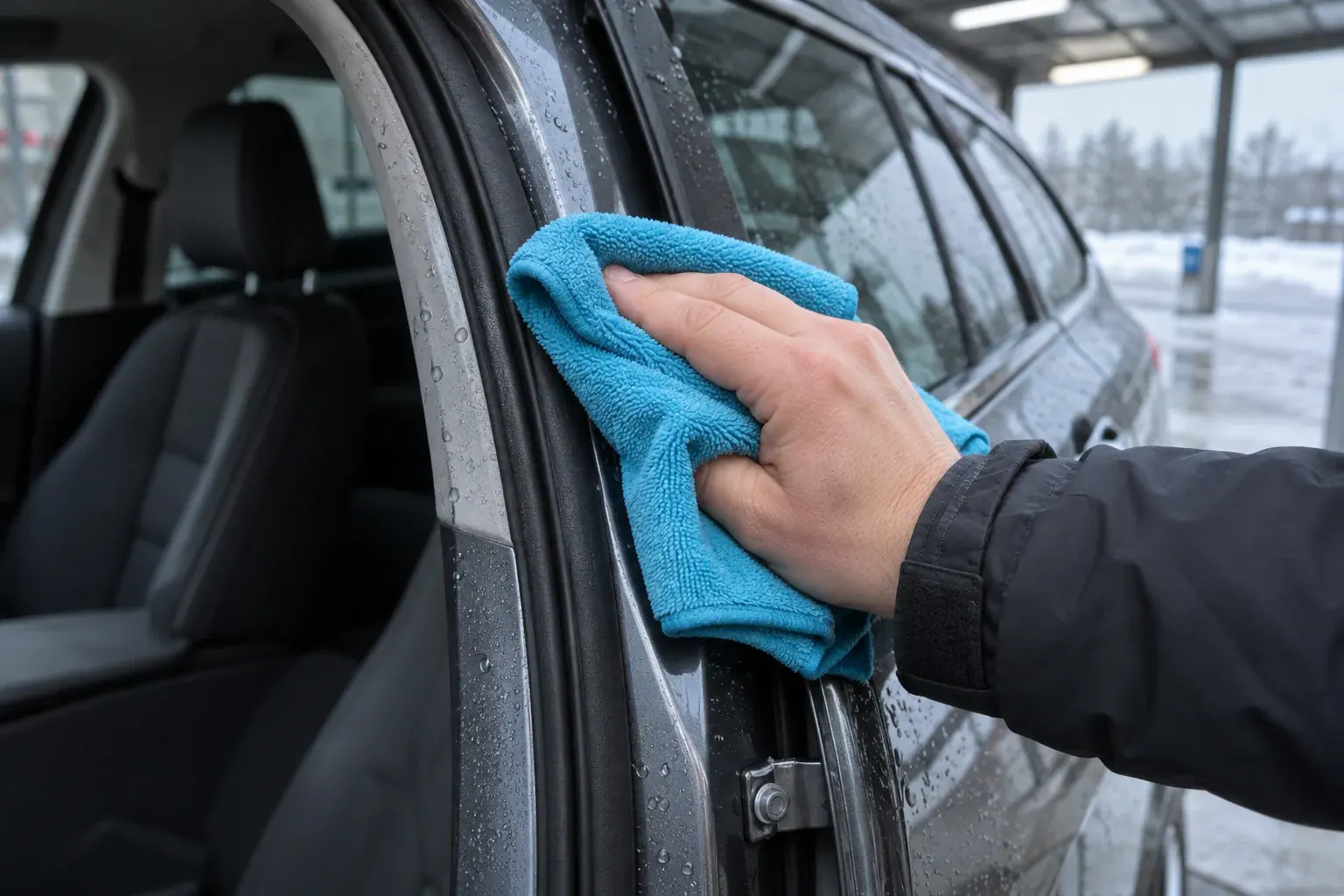
Edges, recesses and accessible areas around handles.
Boot recess, areas around the fuel filler flap or charge port flap.
Windows, mirrors and wipers free of ice.
Once the programme ends, move to a safe, designated area. Open the doors and remove water from their edges, recesses and seals. Also check accessible recesses around handles, the boot lid and fuel filler flap. For an electric car, dry accessible surfaces around the charge port flap as directed in the vehicle manual; do not insert a cloth into the connector. 29
Use a separate, clean cloth for recesses. Drying the bodywork with a dirty towel can undo the benefit of earlier rinsing. Do not try to pull wiper blades free if they have frozen to the glass. 246
Before leaving, check:
- that windows and mirrors provide good visibility;
- that seals and door edges are dry;
- that doors, the boot and flaps close correctly;
- that wipers are free of ice;
- whether the car still needs drying in a frost-free location.
If you have access to a garage above freezing, use it to finish drying. Simply turning on the cabin heating does not ensure that exterior gaps and mechanisms have dried. TÜV NORD recommends allowing the car to dry in frost-free conditions after a winter wash. 3
Remember the brakes too. Volvo recommends checking their operation after washing. Do so at low speed in a safe place and in line with the vehicle manual; do not brake sharply on an icy surface. 6
What helps a self-service car wash operate in winter?
Winter operation requires installation protection and suitable conditions in the bay. TIXE develops proprietary solutions for both tasks: IHS controls floor heating, while ANTI-FREEZE protects the washing system.
IHS. Innovation underfoot.
TIXE's proprietary, patented technology controls heating based on the temperature measured directly in the bay slab. Sensors send information to a controller, which operates solenoid valves in the glycol circuit.
The heating responds to floor conditions. This helps reduce unnecessary heating and supports protection of the bay against freezing.
Discover IHS technologyANTI-FREEZE. Less additional infrastructure.
TIXE pulse frost protection uses washing system controls. The solution eliminates the need to build a separate, closed antifreeze circuit, an additional pump and pits inside the container dedicated to that circuit.
This means fewer additional components and recesses in the servicing area. We tailor the solution's scope and settings to the specific car wash configuration.
Discover ANTI-FREEZEThe graphics illustrate the operating principle. The pulse diagram does not specify operating times or frequency.
For drivers, the result matters: functioning equipment, a properly prepared bay and safe access. Protecting the car wash installations does not dry the car's locks and seals. Also watch the entrance, exit and area around the bay — heating the slab does not mean the entire site is heated.
Want to know how to prepare your car wash for winter? Talk to TIXE about equipment and operating conditions at your site.
How often should you wash a car in winter?
Match the frequency to dirt levels and how you use the car. Daily driving on wet, treated roads differs from an occasional trip on a dry day. Instead of following one schedule for every car, monitor the condition of the windows, lights and bodywork. ADAC does not automatically recommend washing more often in winter than in summer. 10
Do not wait until the next full wash to clean components that affect visibility. TÜV NORD draws particular attention to dirty windows, headlights and indicators. 3
Drivers' questions about washing cars in freezing weather
Can you wash a car at −5°C?
A reading of −5°C alone is not enough to consider washing in an open bay safe. If you can choose the timing, wait for temperatures above freezing. If washing is urgent, a place where you can wash and dry the car in frost-free conditions is a better choice. 2
Does an automatic car wash solve the winter drying problem?
Check recesses and seals even after automatic drying. Water may remain in recesses even when the bodywork looks dry. Your choice of washing method should also follow the vehicle manual. 2
Do you need to use hot water in winter?
No. Do not pour hot water over frozen bodywork. The water temperature should meet the vehicle and equipment requirements; some vehicle manuals expressly prohibit using hot water. 5
Does treating seals replace drying them?
No. Choose a care product suitable for the material, but still remove water from the seals and adjacent recesses after washing. Care and drying are complementary tasks. 4
What should you do if the doors freeze shut after washing?
Do not pull hard on the handle — you could damage it or tear the seal. Check whether other doors open and follow the manufacturer's defrosting advice. ADAC reminds drivers that before driving, the driver's door should also be openable from the outside so assistance is possible in an emergency. 9
Does ANTI-FREEZE protect the car from freezing after washing?
No. It protects the car wash's washing system. Preparing the car and removing water after washing remain the driver's responsibility. 8
Let's prepare your car wash for winter.
Let's talk about IHS, pulse frost protection, and underbody washing and protection programmes. We will help select equipment for a new investment or an upgrade.
Sources and further reading
Accessed: 11 November 2026. The cited vehicle manuals describe specific models. Check your own vehicle manual for the recommendations applicable to your car.
- ADAC — Washing a car in winter: severe frost, temperature differences and vehicle preparation.
- Toyota Poland — Washing a car in winter: choosing conditions, drying seals and gaps, limitations of automatic drying.
- TÜV NORD — Washing a car in winter: visibility and drying in frost-free conditions.
- Volkswagen Poland — A clean car for spring: seal care and drying after a winter wash.
- Tesla — Model 3, Cleaning: example vehicle instructions — nozzle distance, car wash mode and water temperature.
- Volvo — S60 2017, Washing the car: prewashing, locks, material care and checking the brakes. Manual updated 8 June 2023.
- TIXE — IHS: scope of floor heating control.
- TIXE — ANTI-FREEZE: scope of washing system protection.
- ADAC — Frozen car doors: doors freezing shut, drying and avoiding forced opening.
- ADAC — Dos & Don'ts: Washing a car in winter, 15 January 2026: preparation, frequency and paint condition in winter.
- TIXE — underbody washing and protection programmes. Functions of the lance with trolley and the separate protection programme.