

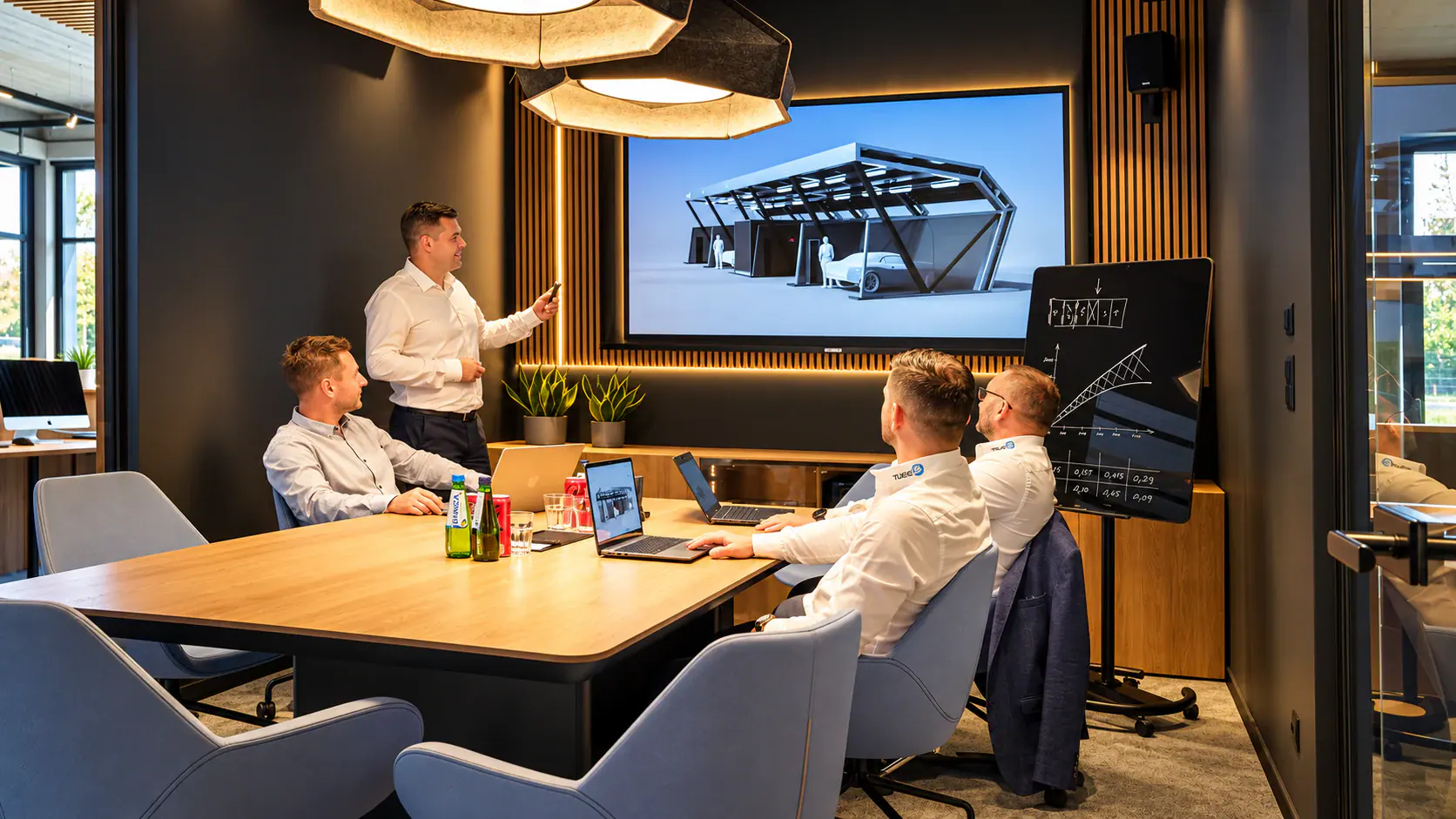
Would you like to open a touchless car wash but only have a plot or a possible location in mind? That is enough to start a conversation. A meaningful quotation, however, needs shared assumptions: the location, facility size, equipment and scope of work. We explain how to bring these together, what to expect from the first analysis and which decisions to make first.
First, identify the decision you want to make
An initial conversation about a car wash can address three different needs. Someone looking for a site needs selection criteria. A plot owner wants to know whether it can accommodate a working facility. An investor with a concept and utility information can already compare specific solutions and supply packages. The stage of the investment determines how precise the answers can be.
Be clear about what matters most today: deciding whether to buy land, choosing the number of bays, setting a budget or comparing quotations. Also say when you need to decide. A deadline linked to a land agreement requires a different work plan from a general interest in building next year.
At TIXE, we start with a free preliminary analysis and a discussion of the technology. A useful outcome is a direction for the next steps: an option to investigate, the missing information and the scope that can already be priced. Preparing the conversation this way makes it easier to move from “how much does a car wash cost?” to an answer specific to your investment.
Show the site clearly so that everyone is assessing the same location
The most useful starting point is a precise plot reference: the town, cadastral area and plot number, or the full identifier. On Geoportal you can locate the site and its cadastral information. A map link helps with the first conversation; further design work will require materials selected by the designer and surveyor.
Add a few photographs taken from a driver's viewpoint. Show the road in both directions, the existing entrance, the centre of the plot and the surroundings. A photograph of an empty surface alone says little about how customers will reach the car wash. An entrance photograph, on the other hand, often immediately reveals something to check: a turn, embankment, ditch or restricted visibility.
- If you own the site: mark the entire area intended for the investment and the features that must remain.
- If you are planning to buy or lease: provide the available documents and the deadlines associated with arrangements with the owner.
- If you are comparing locations: gather the same information for each one. This will let you assess access, development potential and preparation costs together.
Separate confirmed conditions from assumptions
“Utilities are next to the plot” is useful information, but too general to finalise a budget. Establish which materials you already have: connection conditions, a utility network map, correspondence with the operator or merely information from the seller. Check the date of each document and the demand and investment to which it relates.
Treat planning information in the same way. Provide the available local development plan, planning conditions decision or correspondence with the municipality. If you do not have them, flag this as something to check. Missing information is a task to complete, not a parameter to guess.
In practice, a simple distinction is enough: information confirmed by documents, preliminary information and open questions. For example, the chosen number of bays may be an investor's assumption, while the available electrical capacity may be specified in the utility operator's conditions. Whoever prepares the quotation should know which of these parameters can still change.
What should you prepare for the first conversation?
Start with the materials you already have.
- Location
- Town, plot number or map link.
- Site photographs
- The road in both directions, entrance and surroundings.
- Available documents
- Development plan or planning conditions, maps and utility information — if available.
- Budget and timing
- The scope of the planned investment and the decision you want to make.
Decide what the car wash quotation should cover
The price of the technology, the price of complete bays and the total cost of getting the investment operational cover different scopes. Before comparing figures, agree on a common list of items: equipment, technical container, canopy structure, floors, additional equipment, transport, installation and commissioning. Describe documentation, utility connections and site works separately.
Also provide realistic financial limits. This makes it possible from the outset to compare an option within budget with equipment whose cost needs justification. Some decisions concern customer convenience, others facility operation or utility consumption. Each should be assessed in terms of its function and conditions of use.
Ask for a clear statement of the items excluded from the quotation. If you are preparing the site with your own contractors, you need the requirements for its readiness for installation. If you want a broader delivery scope, establish which studies and works the contract actually includes. A full breakdown of expenditure is available in our guide on the cost of building a touchless car wash.
What should the quotation include?
Define the car wash components and the work needed to get it operational.
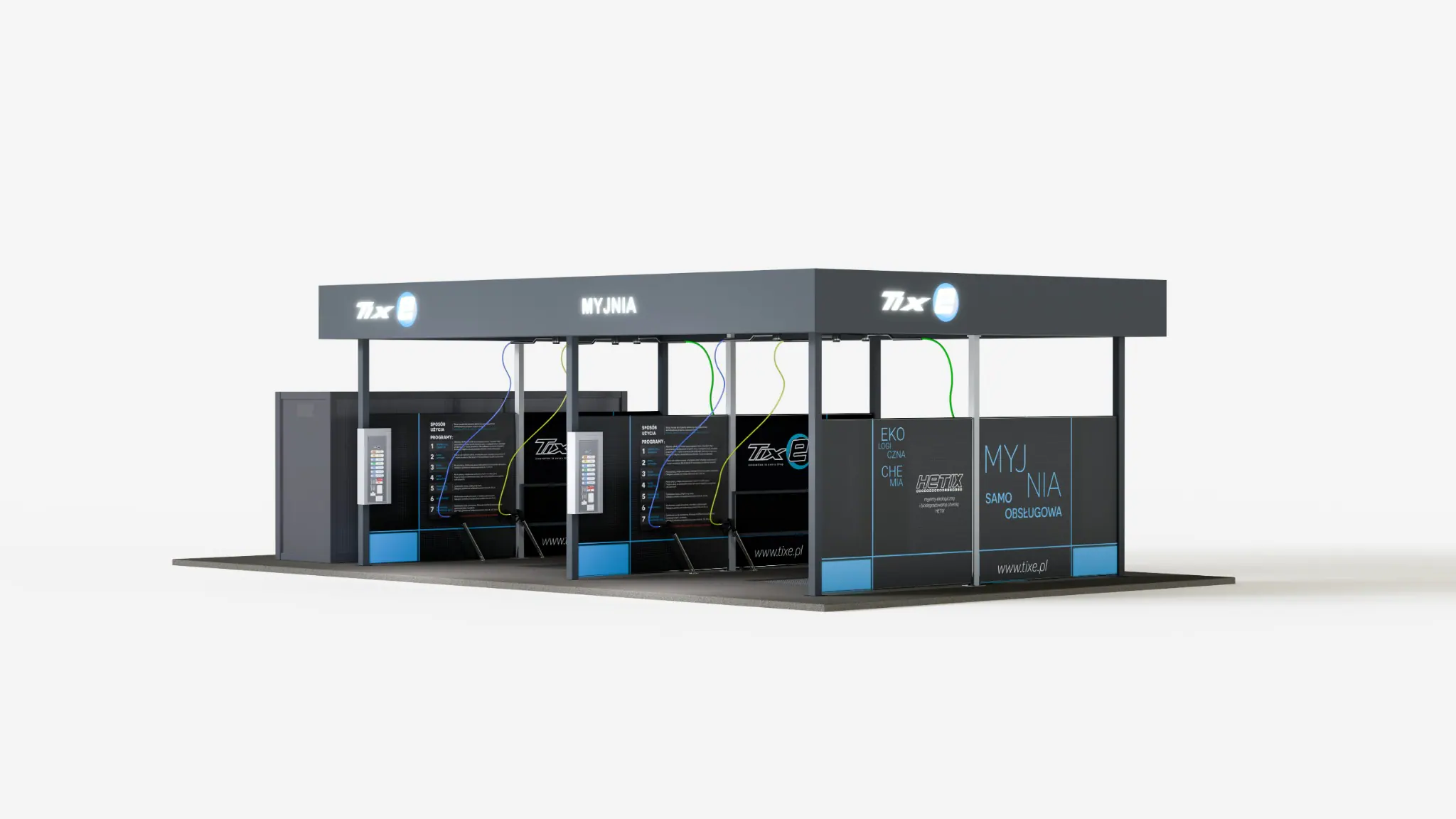
Car wash and equipment
- Technology and technical container
- Canopy structure and floors
- Payments and additional equipment
- Transport, installation and commissioning
Preparing the investment
- Documentation and required approvals
- Utility connections and on-site installations
- Earthworks and site preparation
- Access, surfacing and drainage
For each item, define the scope, contractor and cost. Check which components the quotation includes and which require separate pricing.
Describe how the car wash will operate before choosing equipment
Consider the number of bays alongside demand, plot geometry and space for queuing. Explain who will use the facility: local residents, commuters or customers of neighbouring businesses. This assumption should then be checked in the location analysis.
The importance of convenient access and visibility is also emphasised by operators interviewed in the trade magazine Professional Carwashing & Detailing. Their experience comes from the US market, but the question is equally useful in Poland: can a driver easily fit a car wash visit into a daily route?
For the first conversation, simply describe your needs: card payments, a convenient vacuum area, equipment monitoring, lower water consumption or the possibility of expansion. The manufacturer should turn these needs into a technology configuration. If you are planning another phase, mention it straight away — space needs to be reserved and the installation's readiness checked.
What should be clear after the first meeting?
After the conversation, you need a few clear conclusions: which option you are considering, which information it is based on, what the quotation includes and what still needs confirmation. Ideally, every open question should have an assigned person responsible for finding the answer: the investor, designer, technology supplier or utility operator.
A preliminary concept helps assess the layout, but formal documentation is prepared by the designer. GUNB explains building documents and procedures; the appropriate route for a particular project must be determined from its scope. TIXE's free analysis does not automatically constitute an order for design services, surveys or construction work.
It is also worth agreeing how quotations will be updated. If the number of bays, heat source or container layout changes, an earlier figure may refer to a different solution. Keep the date and option number so that the next conversation refers to the same assumptions.
What should you take away from the first conversation?
Record the conclusions so that you can return to the same option.
Car wash configuration
Number of bays, equipment and proposed layout.
Quotation scope
What the quotation covers and what needs a separate agreement.
Information to confirm
Open questions and the person responsible for gathering the answers.
Next step
A specific task and a date for the next contact.
End the discussion with one specific next step
Early in an investment, it is easy to keep gathering more material without getting closer to a decision. Agree on the next task that will genuinely resolve an uncertainty: confirming access, obtaining connection conditions, comparing two layouts or clarifying the scope of supply.
For example, if the plot geometry initially allows you to consider three bays but you do not know the wastewater discharge options, that is the issue to investigate next. Choosing the fascia colour can wait. The order of actions should reflect how much each answer affects the feasibility and cost of the investment.
You can contact TIXE now with the materials you have. Tell us the location and the stage of preparation. Together, we will organise the information, determine the scope of the analysis and establish what is needed for an individual quotation.
What else do owners and investors ask?
Can I ask about a car wash without a completed design?
Yes. A location, the available materials and a brief outline of your plans are enough for the first conversation. The quotation becomes more precise as the layout, equipment and scope of works are confirmed.
Is it worth telling the manufacturer my budget?
Yes, together with an explanation of which costs it should cover. A budget for the technology alone is a different starting point from funds intended for the land, design, construction and commissioning.
Does the free analysis include a building design?
TIXE's free preliminary analysis and technology quotation help prepare an investment option. A building design, surveys and other studies require a separate agreement on scope and cost.
Let's analyse
your car wash
Do you have a plot or are you considering an investment? We will prepare a free preliminary analysis and a quotation for TIXE technology. Tell us the location and share the information you already have — we will help determine the next steps.
Sources and further reading
- Geoportal — land and building records. Plot identification and the nature of cadastral information.
- GUNB — construction procedures. The role of documentation and choosing a procedure suited to the project scope.
- Professional Carwashing & Detailing — Site insights, 2022. Interviews with operators on visibility, access and location selection. US experience; numerical thresholds are not transferred to the Polish market.
- TIXE — investor zone. The scope of the preliminary analysis and preparation of an enquiry. The examples in the article are original decision-making scenarios.